Prestige Tile & Stone Cleaning
Serving San Diego County
Residential & Commercial
Mon–Fri 8am–5pm · Sat 10am–2pm
Quick answer
What Is the Safest Way to Clean Indoor Terracotta?
It depends on whether the tile is sealed. Unsealed terracotta has no glaze and is fragile: wipe it regularly, scrub embedded soil gently with warm water and a soft cloth, and never use wire brushes. Sealed terracotta is swept and mopped with a mild, residue-free non-ionic detergent. The wrong products leave buildup or damage the finish.
Why it matters
Burned Earth, Naturally Porous
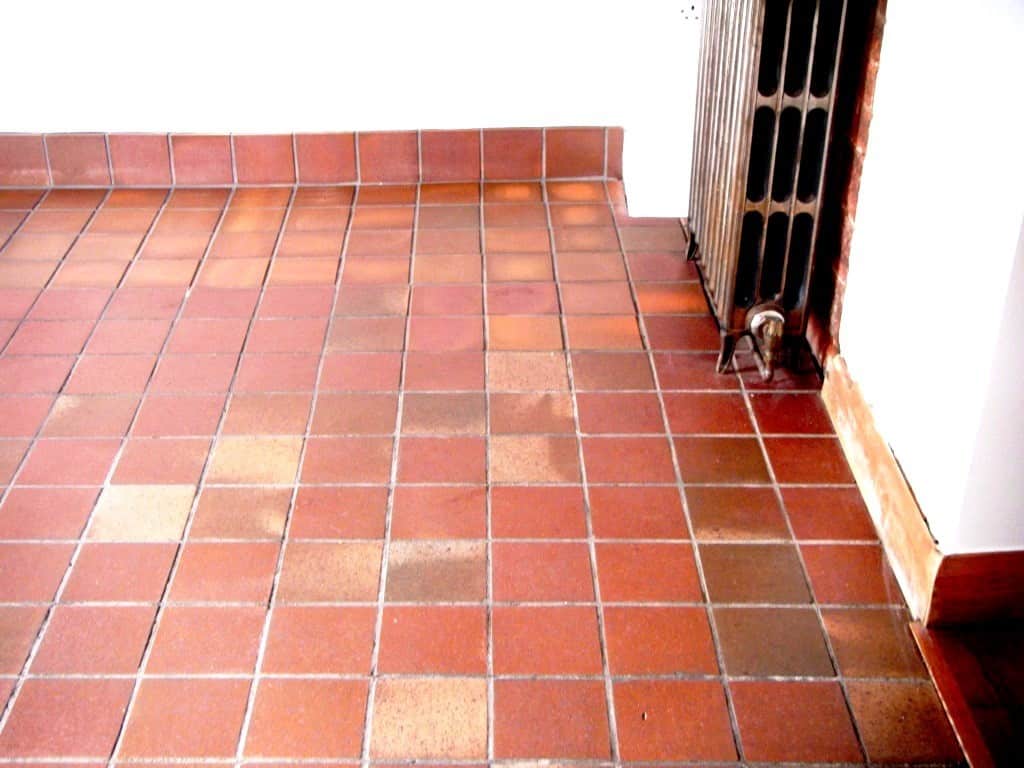
Terracotta is Spanish for “burned earth.” It gives a room a warm, earthy feel, but its naturally porous body attracts dirt, and the right technique removes all but the toughest stains from sealed or unsealed tile.
About the material
What Is Terracotta, and Why Does It Attract Dirt?
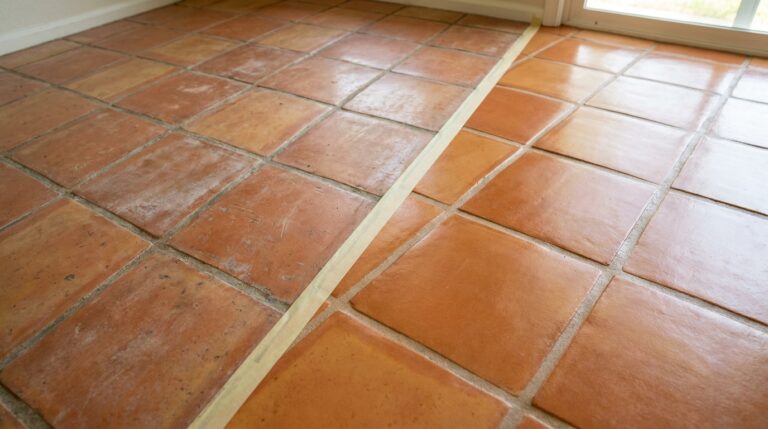
Terracotta means “burned earth” in Spanish. It is a naturally porous clay tile without a natural glaze, so unsealed terracotta is fragile and absorbs dirt, while sealed terracotta resists stains and is much easier to maintain.
Naturally porous
The material absorbs dirt, and the wrong cleaner can leave buildup or harm the finish.
No natural glaze
Unsealed terracotta is fragile and must be cleaned gently.
Sealed tile
A protective coating applied after installation makes it more stain- and maintenance-resistant.
Efflorescence
Salts can surface as an off-white bloom because the tile is so porous.
Methods
Sealed vs. Unsealed Terracotta
Unsealed tile
Wipe off surface dirt before it grinds in; scrub gently with warm water. Heavily soiled areas are usually treated with muriatic or oxalic acid diluted as the supplier directs, then rinsed with clean water.
Sealed tile
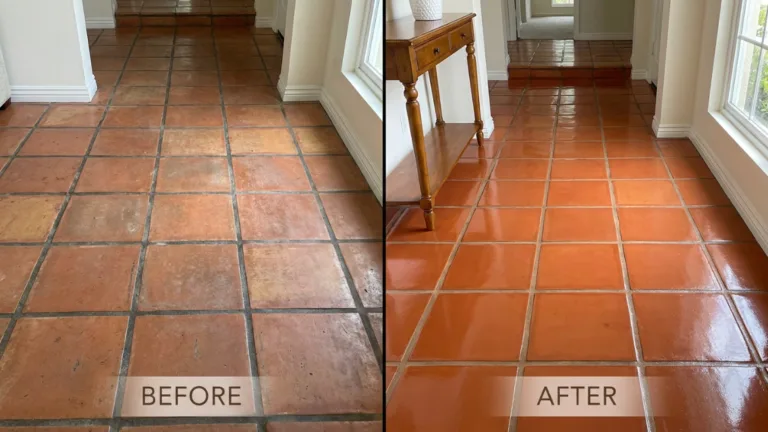
The coating resists stains. Sweep and mop with a mild non-ionic detergent; a grout cleaner keeps grout lines clear; heavily soiled floors can be steam cleaned.
Before sealing
Clean thoroughly first. Rinse chemical cleaners away completely and let the floor dry at least 30 minutes, or residue can keep the sealer from bonding.
Our process
How Terracotta Is Cleaned and Sealed
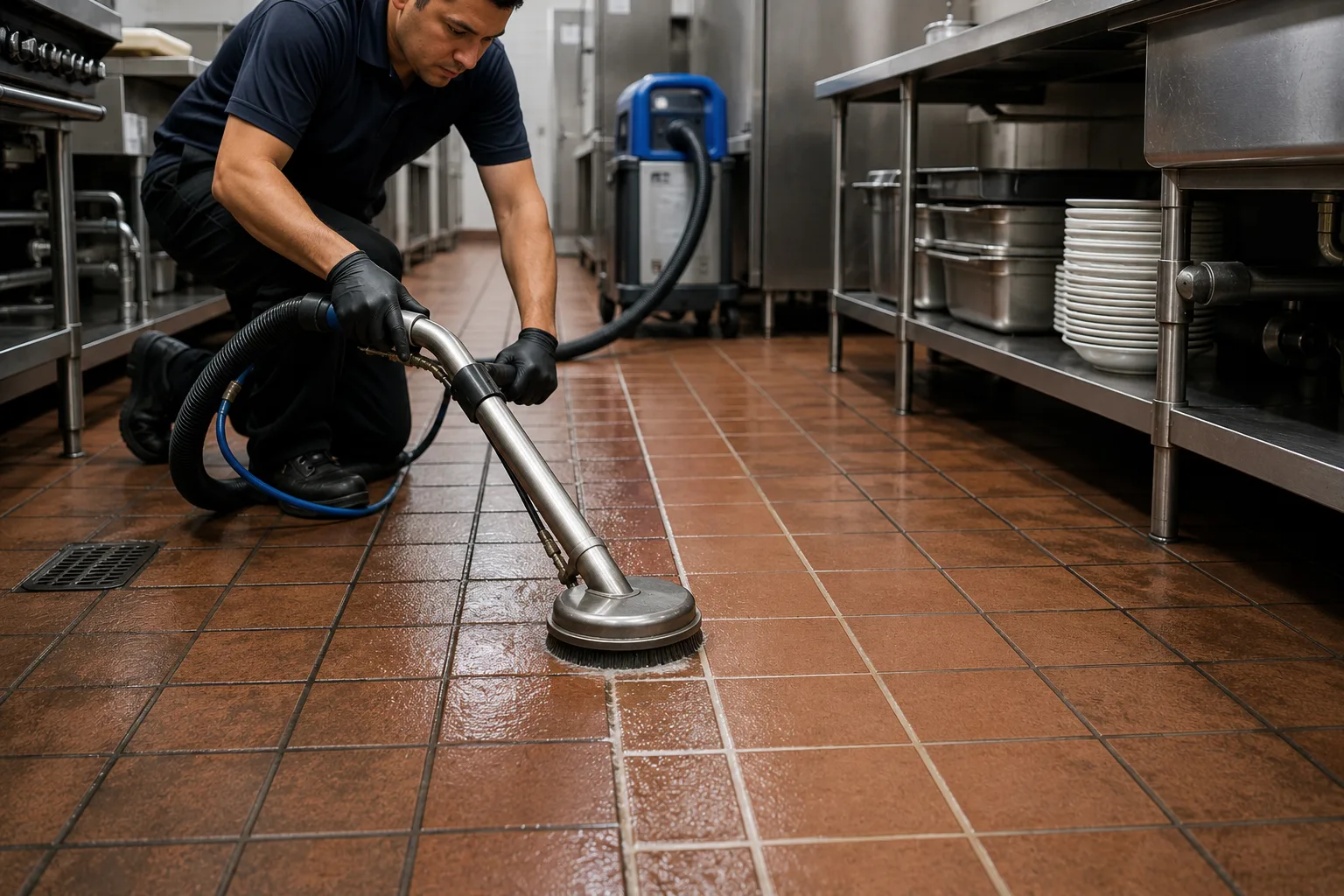
The method depends on whether the tile is sealed. Heavily soiled terracotta can be steam cleaned.
01
Remove surface dirt
Sweep or wipe away loose dirt first.
02
Clean
Warm water and a soft cloth for unsealed tile; a mild, residue-free detergent for sealed tile.
03
Treat heavy soil
Steam cleaning for heavy soil; stain treatments mixed exactly as the supplier directs.
04
Rinse & dry
All residue is rinsed away and the floor dries at least 30 minutes before any sealing.
05
Seal
Sealing makes terracotta much simpler to maintain.
Efflorescence
Removing the White Bloom
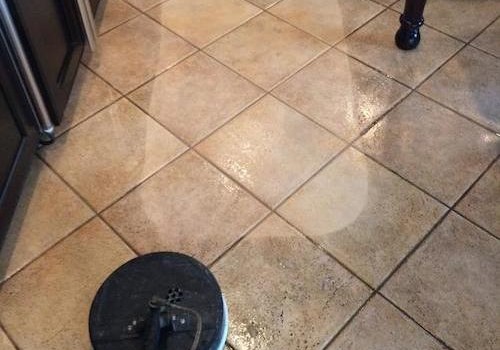
Porous terracotta often shows efflorescence.
Efflorescence is an opaque, off-white bloom that forms when salts come to the tile’s surface. It often fades on its own over several weeks or months. It can be removed with a diluted hydrochloric acid cleaner used according to the label, but it may reappear until the salt supply is exhausted.
Because sealed terracotta is much easier to maintain, many owners choose to seal an older floor after a thorough cleaning.
What to avoid
What to Avoid on Terracotta
Terracotta is easy to damage with the wrong tools and products.
Estimates
What Affects Your Estimate
Every estimate is based on the surface itself, and you receive it in writing before any work is booked. These are the main factors that shape it.
Floor area
The size of the terracotta floor.
Sealed or unsealed
Unsealed tile needs gentler, slower cleaning.
Soil & bloom
Heavy soil, stains or efflorescence.
Sealing
Whether the floor is sealed after cleaning.
Service Area
Terracotta Tile Cleaning in San Diego County
We clean and seal terracotta floors, sealed or unsealed, for homes and businesses throughout San Diego County.
Related services
Related Tile & Stone Services
Common questions
Frequently Asked Questions
Can I use a wire brush on terracotta?
No. Wire brushes and other abrasive tools damage the surface.
What is the white film on my terracotta tile?
Efflorescence, salts rising to the surface. It often fades on its own, or it can be removed with a diluted acid cleaner used as labeled.
How long should terracotta dry before sealing?
At least 30 minutes after a thorough rinse, so cleaner residue does not interfere with the sealer.
Should I seal my terracotta tile?
Maintaining sealed terracotta is much simpler: the coating makes the tile more stain- and maintenance-resistant. The floor must be thoroughly cleaned, rinsed and dried first.
Can heavily soiled terracotta be steam cleaned?
Yes. Steam cleaning is a common way to deal with heavily soiled terracotta.
Get Started
Ready for Cleaner Tile, Grout & Stone?
Tell us what needs cleaning and we'll help you work out the right next step, with no pressure either way.
Free estimates
Surface-safe methods
Residential & commercial