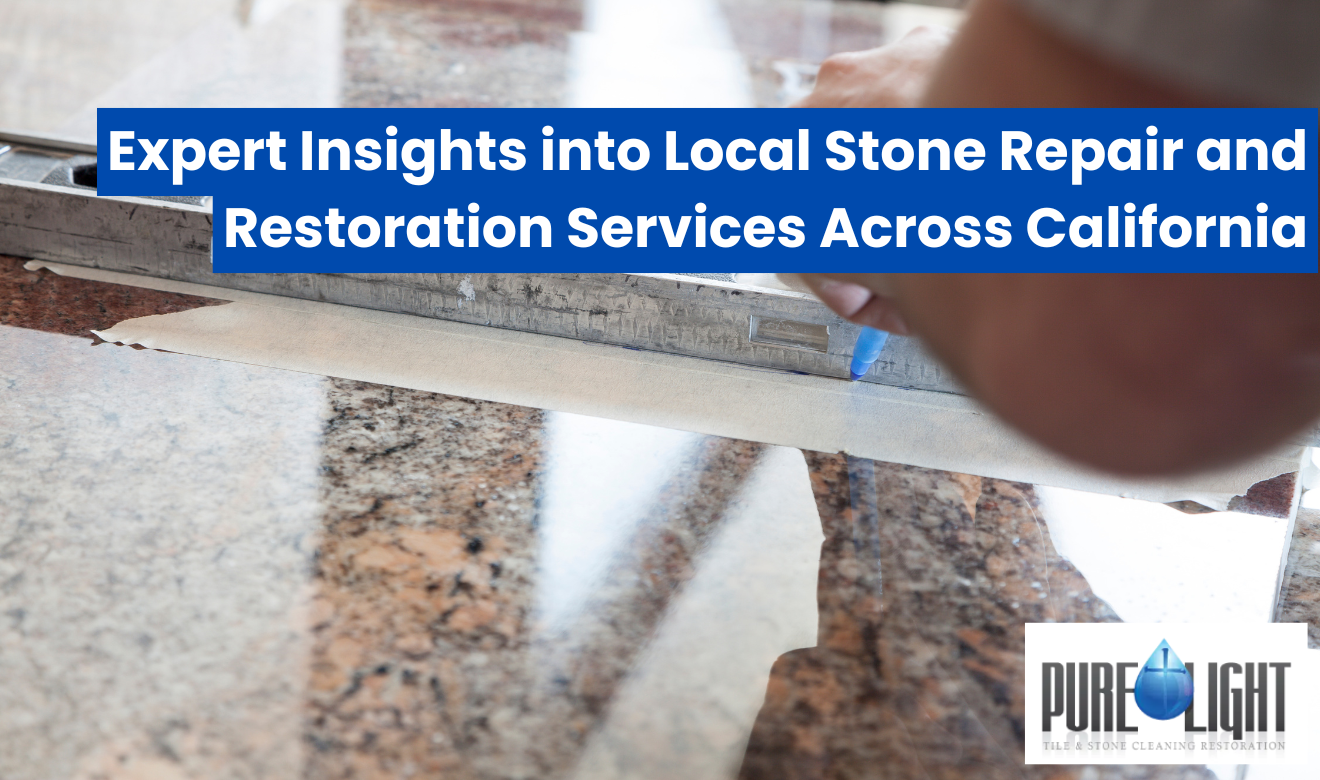
Executive Summary
Granite countertop restoration is a corrective, on-site process that removes surface damage and embedded contamination (not just soil), then restores uniform gloss and stain resistance through honing/polishing and proper penetrating sealing. The definitive solution is to diagnose the cause first (absorption, residue, etching/scratches), then use the least aggressive method that produces an even, factory-like finish—especially around sink rails, seams, and cooktop zones.
Core Insights
- Restoration vs. Cleaning: True restoration mechanically corrects the stone (diamond honing/polishing) and rebuilds protection with an impregnating sealer, whereas basic cleaning cannot remove etch haze, micro-scratches, or finish mismatch.
- Diagnosis Drives the Fix: Water-drop absorption testing, raking-light inspection, and residue checks determine whether you need film stripping, descaling, poulticing, honing, or sealing—preventing “polish-and-seal” shortcuts that fail quickly.
- Finish-Matching Is the Quality Metric: The best outcomes depend on blending sheen across slabs, seams, edges, and sink rails, then sealing only after a neutral rinse and full dry-out to avoid streaks, blotching, and recurring haze.
Article Text:
[Insert Article Text Here]
Granite countertop restoration is the professional process of repairing, deep cleaning, honing, polishing, and sealing granite to return its original shine and stain resistance. Searching for granite countertop restoration near me in California usually means you need on-site service for etching, dull traffic lanes, hairline cracks, or dark oil spots. In Los Angeles and Orange County, technicians often correct hard-water ring buildup near undermount sinks and restore gloss lost from acidic cleaner use. In the Bay Area, common calls include fixing cloudy patches caused by repeated degreaser use around cooktops and restoring worn edges on high-use peninsula corners. In San Diego and the Inland Empire, restoration frequently focuses on salt air residue, grout haze at backsplash lines, and long-term sealer failure that lets moisture darken the stone. A proper restoration visit typically starts with a water-drop absorption test and a scratch visibility check under angled task lighting. It then moves to diamond honing to remove etch marks and lippage, followed by polishing to match adjacent slabs and edge profiles. Final steps usually include solvent-based stain treatment for oil or wine, a neutral-pH rinse, and a penetrating sealer applied in controlled dwell times for even coverage.
What “Restoration” Means for Granite (Not Just Cleaning)
Granite restoration is a corrective process that removes damage in the stone surface and then rebuilds protection with the correct sealer. Unlike routine wipe-downs, it targets physical wear (etching, micro-scratches, dulling) and contamination (oil, minerals, soap film) that sit in pores and fissures.
Professional restoration typically combines mechanical abrasion (diamond honing/polishing) with chemical steps (poultices, mineral deposit removers, neutral rinsing) so the finish matches across seams, sink rails, and edge profiles. This is especially important on granite because it’s hard, but still porous, and the wrong products can create cloudy residue that looks like “stains” but is actually buildup.
Common Problems California Homeowners Call For
Most on-site granite jobs in California fall into a small set of repeatable failure modes tied to water chemistry, cooking oils, and cleaner misuse. Correct identification matters because the fix for “cloudy granite” is not the same as the fix for “etched granite.”
- Dull traffic lanes near prep areas: micro-abrasion from gritty debris and repeated wiping.
- Hard-water rings and scale around faucets and undermount sinks: calcium carbonate and silicate deposits that need controlled descaling.
- Dark oil spots at cooktops: oils migrate into pores; requires solvent-based poulticing and time.
- Cloudy patches from degreasers: surfactant film or alkaline residue that must be stripped and rinsed properly.
- Hairline cracks or edge chips: impact damage that can often be filled and blended with color-matched epoxy.
- Sealer failure: water darkening, rapid absorption, or uneven wetting that shows the protective barrier is no longer functioning.
How Pros Verify the Cause Before Touching the Surface
Competent restoration starts with testing, not guessing. Simple field checks determine whether the issue is absorption, residue, or surface damage so the technician uses the least aggressive effective method.
Common on-site diagnostics include:
- Water-drop absorption test: small droplets placed in discreet areas to observe darkening and dwell time, indicating sealer condition and porosity.
- Raking-light inspection: angled task lighting to reveal scratches, dull bands, and inconsistent polish.
- Residue check: a controlled wipe using stone-safe cleaner to determine whether haze is topical film vs. in-stone discoloration.
- Edge and sink-rail check: verifies whether the finish mismatch is localized to high-contact zones.
- Spot ID for stains: oil-based spots behave differently than organic (coffee/wine) or mineral staining; treatment chemistry differs.
In kitchens, technicians also check adjacent materials: backsplash tile, grout lines, and caulk transitions. If surrounding joints are discolored or failing, you may need coordinated surface cleaning so the whole area looks consistent (including the grout lines that visually frame the countertop and backsplash).
Step-by-Step: What an On-Site Granite Restoration Visit Usually Includes
Restoration follows a sequence: remove contaminants, correct the surface mechanically, then protect the stone. Skipping steps often causes the “it looked good for two weeks” problem.
- 1) Site protection and setup
- Masking and shielding for cabinets, cooktops, and stainless fixtures.
- Dust control measures and controlled water use near seams and cutouts.
- 2) Deep cleaning / film removal
- Stone-safe alkaline/neutral cleaning to remove oils and residues.
- Targeted mineral deposit removal near faucets (controlled contact time and thorough rinse).
- 3) Honing (diamond abrasion)
- Progressive diamond grits to remove etch marks, scratch haze, and uneven sheen.
- Edge detailing to match the field finish and profile.
- 4) Polishing
- Polish refinement to match adjacent slabs (important across seams and corners).
- Final inspection under raking light to confirm uniform gloss.
- 5) Stain treatment (as needed)
- Solvent-based poultice for oil; oxidizing treatment for some organic staining.
- Repeat cycles only when necessary, with rinse/dry time in between.
- 6) Neutral rinse and dry-out
- Neutral-pH rinse to prevent sticky residue and re-soiling.
- Drying verification before sealing (sealing damp stone can trap moisture and cause blotching).
- 7) Penetrating sealer application
- Applied evenly with controlled dwell times and full buff-off to prevent streaking.
- Secondary coat only if absorption testing shows it’s required.
Restoration Methods Mapped to Symptoms (Use This to Vet a Quote)
Different granite problems require different tools and chemistry; one-size “polish and seal” quotes often fail. Use the mapping below to confirm the proposed method matches the symptom.
| Feature / Metric | Specifications | Local Guidelines |
|---|---|---|
| Hard-water rings at sink rail | Controlled descaling + thorough neutral rinse; may require light honing if deposits etched the finish | Common in coastal and hard-water areas; protect undermount sink rim and avoid overspray into cabinet voids |
| Dull traffic lanes / uneven sheen | Progressive diamond honing followed by polishing to blend sheen across slabs and edges | Verify finish match under raking light; kitchens with peninsula corners often need edge-specific work |
| Dark oil staining near cooktop | Solvent-based poultice cycles + dry time; seal only after stain is resolved and stone is dry | Ventilation required during solvent use; protect adjacent caulk and painted drywall at backsplash |
| Cloudy film from degreaser/cleaner residue | Film stripping + repeated clean-water rinsing; polish only if surface is mechanically dulled | Bay Area cooktop zones commonly show this; require a residue-free finish before sealing |
| Edge chips, hairline cracks | Color-matched epoxy fill, razor-leveling, spot-hone/polish to blend | High-use corners are typical; confirm food-contact safe curing and smooth-to-touch finish |
| Sealer failure (rapid absorption/water darkening) | Deep clean + dry-out + penetrating sealer applied with correct dwell and full buff-off | In coastal zones, salt air residue and humidity increase dry-out time; don’t seal damp stone |
What to Ask When You Search “Granite Countertop Restoration Near Me”
Good screening questions reveal whether you’re hiring a true stone-restoration technician or a cleaner with a topical shine product. The goal is a measurable outcome: uniform finish + improved stain resistance without residue.
- Will you mechanically hone/polish as needed, or only apply a wax/topical polish? (Topicals can streak and trap soil.)
- How will you confirm whether it’s etching, residue, or absorption? (Look for raking light + water-drop testing.)
- How do you protect seams, sink rims, and cooktop cutouts? (These are the most common failure points.)
- Which sealer type will you use—penetrating/impregnating vs. coating? (Granite kitchens typically perform best with penetrating sealers.)
- What is the cure and re-use time? (You need clear instructions for water exposure and cleaning after sealing.)
If your project includes surrounding surfaces (backsplash tile, shower-adjacent vanity splash zones, or nearby floors), coordinating cleaning methods prevents a mismatch in appearance. For service options that address kitchen stone surfaces specifically, see Countertop Cleaning.
Care Rules That Prevent Repeat Damage After Restoration
Most repeat calls trace back to two issues: harsh chemistry and abrasive wiping. After restoration, correct daily maintenance protects the polished finish and extends sealer performance.
- Use a neutral-pH stone cleaner or mild dish soap diluted in water; rinse and dry to prevent mineral spotting.
- Avoid acidic or highly alkaline products (vinegar, bleach mixes, heavy degreasers) because they can dull the finish or leave a film.
- Use soft microfiber; avoid scouring pads that create micro-scratches that read as “dullness.”
- Manage hard water: squeegee or towel-dry around faucets and sink rails to prevent ring buildup.
- Wipe oils quickly near cooktops; don’t let cooking oils dwell and migrate into pores.
For broader day-to-day countertop care across materials (granite, quartz, porcelain, laminate), this guide is a practical companion: 5 immediate cleaning tips for various countertop materials in San Diego, CA.
When Restoration Is the Correct Choice (and When It Isn’t)
Restoration is ideal when the stone is structurally sound but cosmetically worn or contaminated. If the slab has significant structural defects, you may need fabrication-level repair instead of surface refinishing.
Restoration is usually appropriate for:
- Widespread dullness, light-to-moderate scratching, and uneven gloss
- Water rings, mineral haze, and soap film buildup
- Localized staining that responds to poultice treatment
- Minor chips along edges that can be filled and blended
Escalate beyond restoration when you have:
- Major cracks that move (structural movement) or repeated seam separation
- Severe slab warping/lippage tied to installation issues
- Large sections with missing material, failed substrate support, or sinking overhangs
Finish-Matching: The Detail That Separates “Okay” From “Factory-Like” Results
Uniform finish is the core quality metric in granite restoration. The best work matches gloss and texture across the field, edges, corners, and seam lines so repairs are invisible in everyday lighting.
- Edge profile blending: bullnose, eased, bevel, and ogee edges reflect light differently and must be polished accordingly.
- Seam area consistency: adjacent slabs often vary slightly; polishing must be feathered to avoid a visible “band.”
- Sink rail refinement: the 2–4 inches around undermount sinks takes the most abuse; it often needs separate honing steps.
- Final inspection under angled lighting: overhead lighting can hide defects that show immediately with raking light.
“Restored and Protected”: What Success Looks Like
A proper granite restoration leaves the surface flat-looking under angled light, smooth to the touch, and measurably more resistant to water darkening and oil penetration. You should see even gloss across the slab, clean edges around sinks and cooktops, and no sticky residue or streaking from sealers.
When you’re evaluating granite countertop restoration near you in California, prioritize technicians who test absorption, correct the surface with diamond honing (not just topical shine), and finish with a penetrating sealer applied with controlled dwell and complete buff-off. That combination is what reliably returns both appearance and performance—especially in kitchens where mineral deposits, oils, and frequent wiping accelerate wear.
Frequently Asked Questions
Stop Guessing With Your Granite—Get It Restored the Right Way (Before You Lock In Permanent Damage)
If your granite is dull, blotchy, ringed around the faucet, or darkening near the cooktop, you don’t need another “miracle cleaner.” You need the correct diagnosis and a restoration process that actually fixes the surface—then protects it.
Here’s the real problem with DIY (and bargain “wipe-and-shine” services): granite issues don’t all come from the same cause. What looks like a stain could be residue. What looks like “cloudiness” could be micro-scratching. And what looks like “just hard-water” can turn into etched, uneven finish if the wrong descaler or scrub pad hits the surface.
When restoration is handled without an experienced local stone pro, you risk:
- Permanent dull zones from abrasive pads and gritty wiping that create micro-scratches you can’t “clean off.”
- Etch-like haze and streaking from acidic/alkaline products and leftover degreaser film that keeps coming back.
- Blotchy sealing when sealer is applied to stone that isn’t fully stripped, neutral-rinsed, or dried out—locking in uneven dark spots.
- Worsened sink-rail damage when hard-water scale is scraped or chemically attacked without proper control, leaving a rough, mismatched sheen.
- Visible “banding” at seams and edges when polishing isn’t feathered correctly across slabs and profiles.
If you want results that look factory-like—not “better from a distance”—the job has to be tested first (absorption + raking light), corrected with diamond honing/polishing as needed, and sealed with the right penetrating product using proper dwell time and full buff-off.